
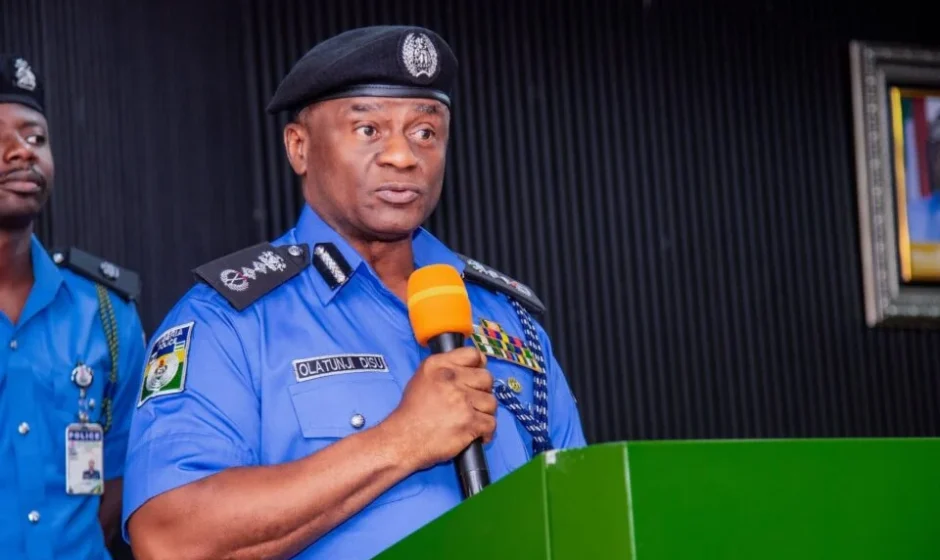

The newly sworn-in Inspector-General of Police (IGP), Tunji Disu, has inaugurated a special committee to develop a framework for establishing state police. This comes amid growing calls for decentralized policing to better address local security challenges.
The initiative aligns with President Bola Tinubu’s recent push for constitutional amendments during a meeting with senators, where he emphasized that state police would enhance grassroots security and enable quicker responses to threats. The current centralized system, Tinubu noted, requires updates to support this reform.
During the inauguration, IGP Disu highlighted the committee’s key responsibilities, including reviewing policing models from Nigeria and abroad, evaluating community security needs, and proposing operational structures for state police. The panel will also tackle issues like recruitment, training, funding, accountability, and oversight to build public trust and professionalism.
Disu stressed that state police could focus on community safety, conflict prevention, and rapid threat response, describing it as a collaborative effort that would strengthen overall security. “This collaborative arrangement will encourage specialization, strengthen professionalism, and ultimately deliver more effective security outcomes for our citizens,” he said.
The committee is chaired by Prof. Olu Ogunsakin, Director-General of the National Institute for Police Studies, with CP Bode Ojajuni as secretary. Other members include DCP Okebechi Agora, DCP Suleyman Gulma, ACP Ikechukwu Okafor, CSP Tolulope Ipinmisho, and retired CP Emmanuel Ojukwu.
Shortly after his swearing-in ceremony at the Presidential Villa attended by Vice President Kashim Shettima, top officials, and dignitaries, Disu explained that the committee was formed proactively to ensure the Nigeria Police Force contributes its expertise to the debate. He clarified that the police view state police as a partnership, not a threat, and are committed to making it succeed.
Retired senior officers have welcomed the move. Former Assistant IGP Ali Amodu called it “a right step in the right direction,” noting that it allows professional input on decentralization, an idea he’s supported since the 1980s based on UK models. He emphasized that local policing fosters better community ties and intelligence sharing, while urging constitutional amendments to enable it.
Similarly, ex-Commissioner of Police Lawrence Alobi praised the committee as a proactive step, urging it to define clear structures, supervisory roles, and protocols to prevent jurisdictional conflicts.
In a related development, Disu addressed potential fallout from the escalating Middle East conflict, stating that the police are monitoring Islamic groups in Nigeria with ties to the region. He assured that patrols and community engagements are in place to maintain law and order, warning against any vigilante actions.
Disu’s appointment follows the resignation of former IGP Kayode Egbetokun on February 23, 2026.